

Decomposing Creation
Guest post from Mollie Donihe Wilkerson

Everything Is Crumbling: Vacation Mode!
I will be traveling for most of June, so Everything Is Crumbling will go into Vacation Mode! The newsletters will continue weekly—they will just be a little different.
This is what Vacation Mode looks like: guest posts from two of my favorite writers (read Britt’s post from last week!), a hearty links post with surprise rabbit trails, and a postcard from abroad.
I’ll be back in July with the lectionary and a case of jet lag!
Be sure to subscribe down below to make sure you never miss a post.
Our second guest post this month comes from the most magical person I know: Mollie Donihe Wilkerson. We met through a mutual friend who said, “You two should meet,” and so we set up a blind date at a bistro by the river and talked for over two hours about everything important to us. I swear that every time I am in Mollie’s presence, my life changes. She is a creativity catalyst, an incredible sewing teacher (speaking as her student), and a gracious host. I am pleased as punch to welcome her to Everything Is Crumbling today. Make sure you subscribe to her Substack! You will not regret it.

Rev. Mollie Donihe Wilkerson is a textile artist and clergy stole maker in Fort Worth, TX. You can usually find her stitching fabrics together, joining a pilates cult, or chasing around her 2-year-old. Mollie writes on Substack at molliedonihe.substack.com and shares/sells her artwork at molliedonihe.com.
Hi, my name’s Mollie, and I have a jar of moldy banana peels in my refrigerator.
Geez. Okay. What a way to open. Ashley, who did you invite to write on your Substack?
What I’m trying to say is:
Hi.
My name is Mollie.
And I like to compost.
Or rather, I really like the idea of composting.
I like the idea of composting so much that my husband1 and I have—count ‘em-–four different methods of compost currently breakin’ it down in our backyard.
I like the idea of composting so much that I valiantly rescue every possible scrap of fruit and vegetable waste from our kitchen, saving it from its landfill fate and throwing it instead into fridge or freezer purgatory.
I like the idea of composting so much that I… I get a little caught up in the idea of composting and forget to focus on the act of composting. Hence the banana peel jar. I collected it with the best of intentions, but I could always come up with something better to do than to actually take it outside to compost.
I seem to be in a season of collecting more than I compost. Because let’s face it: the idea of decomposition is easier than the act of decomposition.
My armchair philosophizing on decomposition leads me through a shaded woodland path, dry leaves crunching under my feet. The breeze picks up a gentle scent of the undergrowth while, inexplicably, Kacey Musgraves’ “Heart of the Woods”2 plays somewhere in the distance. Mushrooms pop up out of the soil, whispering the stories of their mycelial networks that carry deep and beautiful earth wisdom. Tree branches, strong from the once-living nutrients they draw from the soil, intertwine into the rafters of this cathedral. This place, fueled by the cycle of decomposition, is holy.
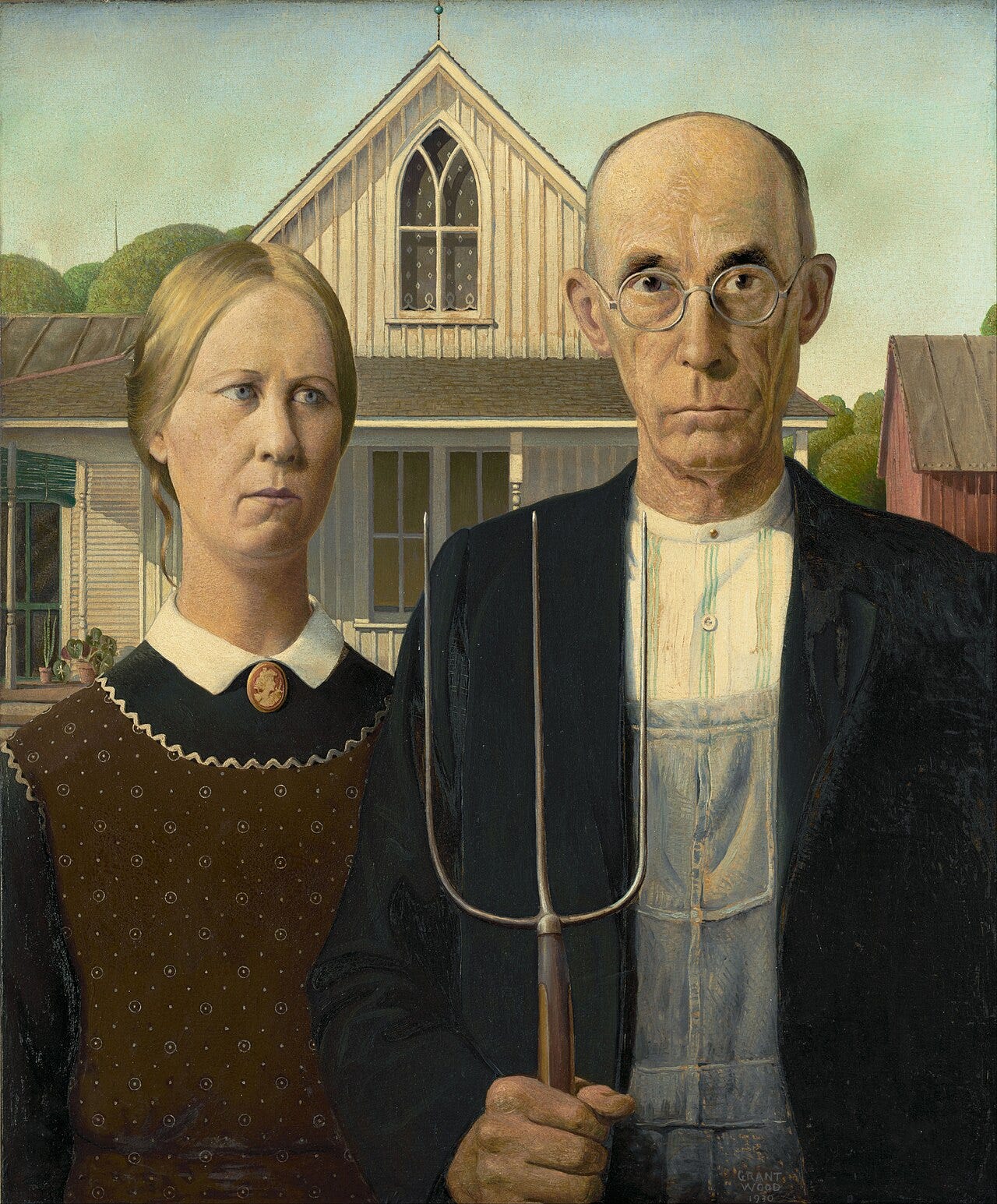
But then I snap out of my reverie and open the refrigerator and realize I have work to do. That’s when the reality of the work hits me: grabbing a huge jar full of unwanted produce scraps and digging around in the garage for the decrepit pitchfork that was probably made in 1985. I think about putting on garden gloves, but I can only ever find one, so I resign myself to the feeling of the dry, splintering wood of the pitchfork handle against my palms. I lean over into the compost heap and feel my muscles strain as I pick up large clumps of leaves, dirt, and broken-down debris, trying to stir everything up and introduce new life into the system.
Stirring or “turning” a compost pile is nothing like stirring a pot of soup. It’s hard work. It doesn’t smell bad, but it never smells quite as good as I remember the forest floor smelling. Maybe that’s because it’s 95 degrees and full sun in my Texas backyard, and I’m sweating, and every little bit of leaf dust flying up out of the compost pile is sticking to my temples and shoulders and the front of my clothes.
I try to remind myself how much I love composting. How beautiful it is. How meaningful it is.
This is holy, this is holy, this is holy, I repeat to myself.
Sooner or later, my repetition morphs into this sucks, this sucks, this sucks.
I spent some time considering the lectionary texts this week, and I kept being drawn back by Psalm 116,3 which asks: “What shall I return to the LORD for all [the Lord’s] bounty to me?”
In my mind, the word “bounty” immediately conjures up fields of ripe vegetables, trees heavy with ripe fruit, baskets overflowing with harvest, long tables laden with seemingly endless offerings. All of this is made possible by the people or animals or natural processes that return nutrients to the soil so that from it, new life and new bounty can spring forth.
What shall I return to the Lord for all the Lord’s bounty to me?
The Psalmist goes on to give us their answer, but in my reading, I had a hard time getting past the question.
This question compelled me: not what should I give to the Lord or what should I do for the Lord, but what shall I return?
Looking at my compost jar in the fridge makes me ask myself: are there other places where I’m holding up the process of returning God’s bounty back to God?
This word return might imply a lack of human ownership over that which ultimately has always belonged to God. But it also suggests that we, as recipients of God’s love, generosity, and belonging, have a responsibility to do something to continue that cycle.

One of the ideas that has decomposed in my belief system—or rather, one that for many years I have been actively trying to decompose—is the Protestant work ethic4 and the notion that I have to prove myself to God, prove my Godliness to others, and toil under the weight of the expectations that God has for me. This simply doesn’t line up with who I believe God to be.
And yet, neither does the idea that my relationship with God is one of simply receiving the bounty of the Lord and just…being grateful for it.
I’m a process theologian5 first and foremost. It’s a central belief of mine that human beings, as individuals and communities, play a necessary role in the ongoing process of God’s creation. We’re not just observers of God’s work; we’re participants.
All over creation, I see evidence of cycles that need to continue cycling in order for the fullness of creation to express itself. And I see what happens when those cycles are interrupted.
I see populations of animals that fade from existence as their homes are stripped of resources and not replenished.
I see landscapes that crumble under the weight and greed of extraction.
I see entire ethnic groups who, stripped of their humanity and dignity, become disposable pawns in a hideous game of war and genocide.
There is some bounty that simply needs to be returned.
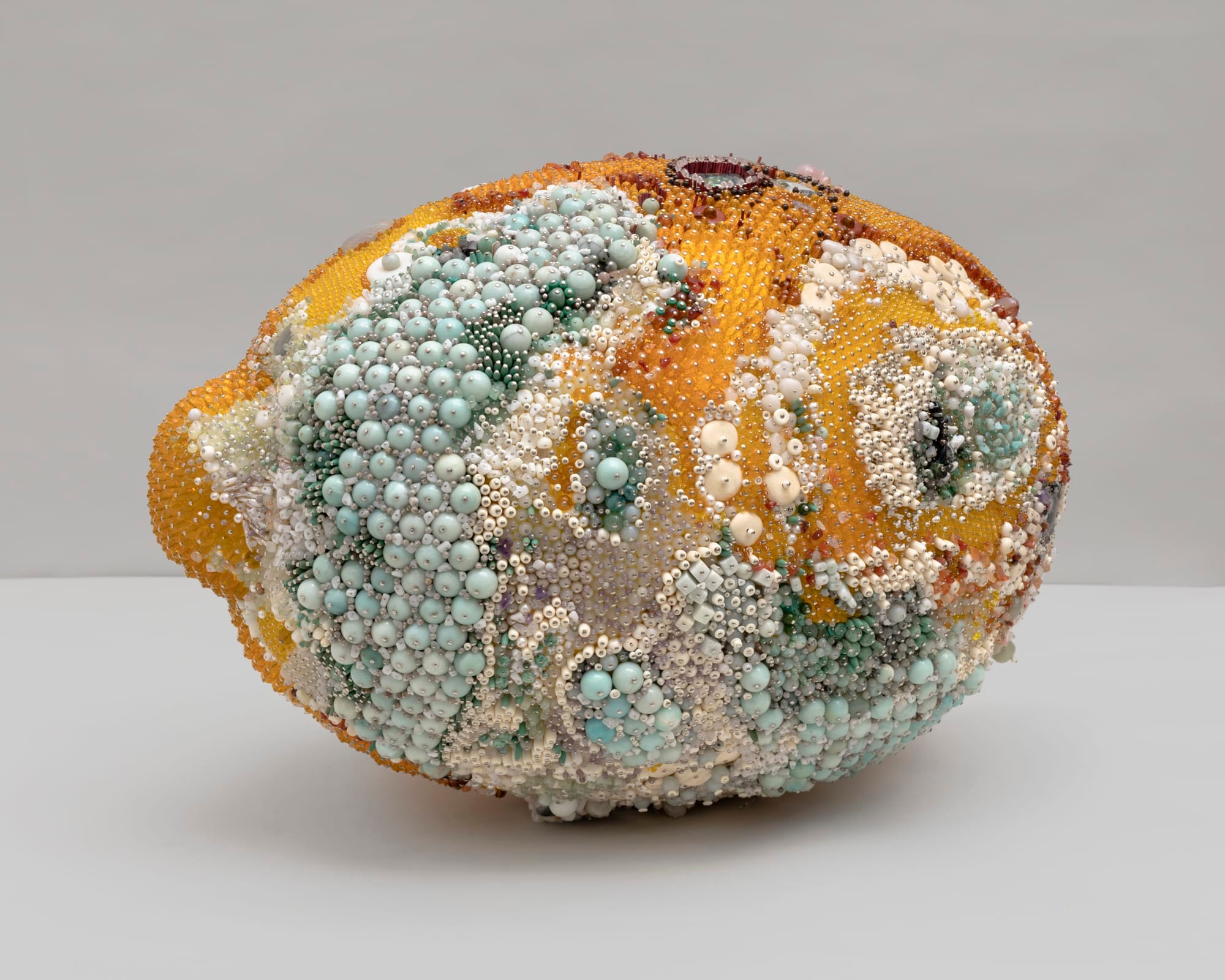
Compost is a beautiful process, but of course it’s more than that. Perhaps compost can inspire us as a metaphor for how we might decompose the systems that have held up the highest and mightiest in our society while placing the burden of weight on those we’ve collectively deemed most “undesirable.”
All over creation, new life depends on something being broken down.
What shall I return to the Lord for all the Lord’s bounty to me?
Maybe today, returning looks like actually opening up the refrigerator, carrying the compost outside, and finally making the thing that’s easier to keep as an idea into an action instead.
A jar of semi-decomposed banana peels can’t be the best I have to offer.
But maybe it’s part of it.
BTW, my husband Ryan is a Certified Master Composter, which is in fact a real thing.
Rooted in Calvinist thought, the Protestant Work Ethic views hard work and discipline as an indicator of spiritual health. This term was coined in 1905 by sociologist Max Weber who critiqued the worldview and its effects on society.
Basically, the world is interconnected and constantly changing, and God works through persuasion and suggestion rather than control. If you’re interested in this, check out the work of Marjorie Suchocki (she’s my fave).